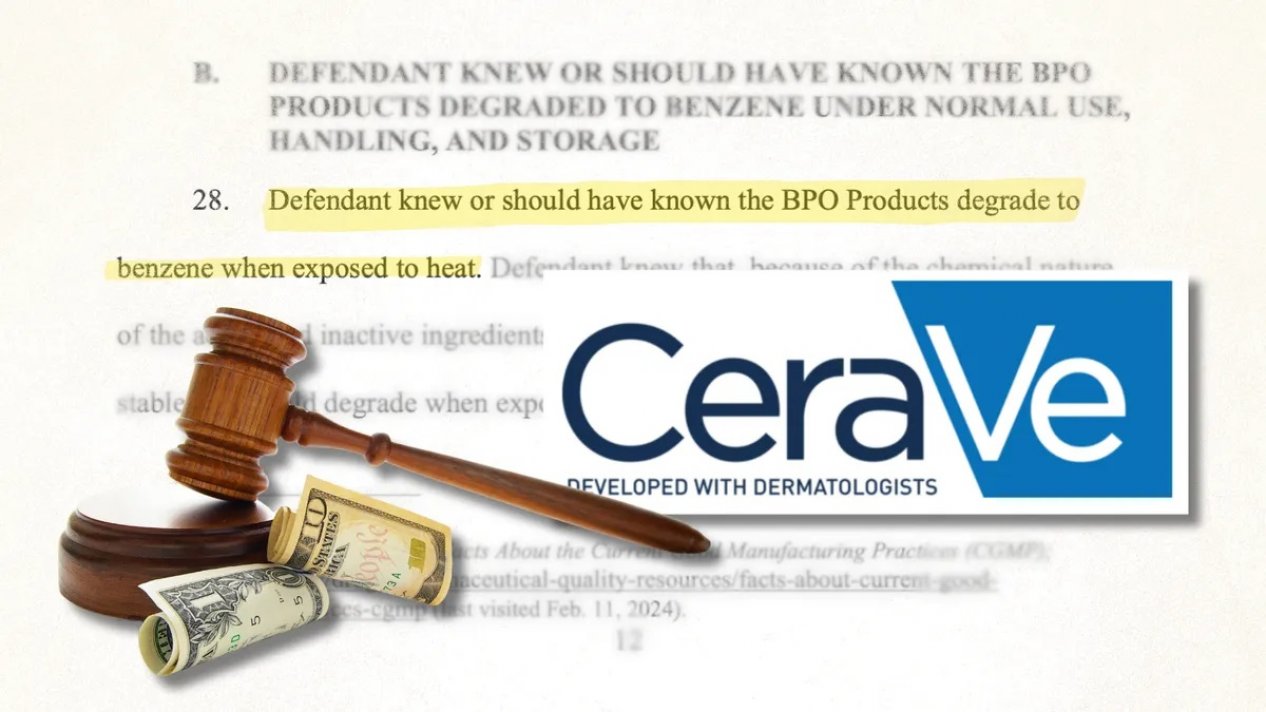
The lawsuits concern products containing benzoyl peroxide, an active ingredient in acne treatment.
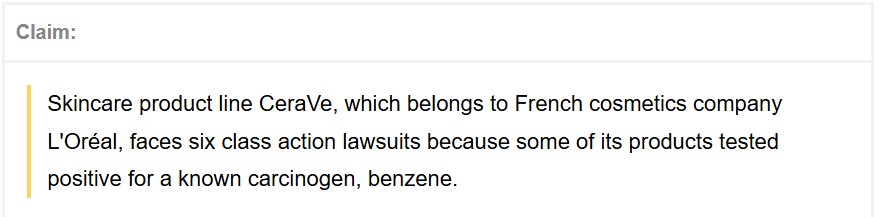
In June 2026, posts circulating online claimed that cosmetics giant L'Oréal was the target of several class action lawsuits alleging that its CeraVe skincare product line exposed users to a known carcinogen.
The claim spread widely through social media posts written in English, Spanish, Arabic, French and Turkish. One July 1 X post written in Turkish and translated to English read (archived):
CeraVe cancer controversy.
Six class action lawsuits were filed in the US against the L'Oréal-owned brand, claiming that benzoyl peroxide in some of its acne cleansers turns into benzene when heated;
An independent lab found benzene levels up to 6 times the FDA limit.
Snopes readers emailed us and searched our website for more information about the alleged lawsuits and claims of a cancer-causing chemical in the skincare products.
In short, the story is true. Snopes identified six ongoing lawsuits against L'Oréal, CeraVe's parent company, after an independent lab called Valisure — which was founded by former Yale students — identified high levels of benzene in products that include benzoyl peroxide. This compound is an active ingredient that treats acne, according to CeraVe's website (archived), which also confirms that its Acne Foaming Cream Cleanser and its Acne Foaming Cream Wash contain 4% and 10% benzoyl peroxide, respectively.
Though Valisure did not cite CeraVe or L'Oréal directly in its March 2024 statement, it said benzoyl peroxide (BPO in the statement) degrades into benzene, a known carcinogen, at relatively low temperatures, including body temperature, per their testing:
Valisure's tests found benzene at high levels when BPO products were incubated at 37°C (98.6°F - body temperature), 50°C (122°F - accepted pharmaceutical stability testing temperature) and 70°C (158°F - hot car temperature).
Shortly after Valisure published its results, several plaintiffs filed lawsuits, starting with a woman named Jennifer Snow, who filed on March 8, 2024, in Hawaii. Another class action lawsuit was filed shortly thereafter, on March 15, 2024, by Holly Grossenbacher in Louisiana. Ellen Painter and Robert Hightower in Missouri followed suit on March 19, as did Lucinda O'Dea in Illinois on April 5, Ciara Noakes on April 11 and and Latifah Abednego in New York on May 24.
In November 2024, all plaintiffs requested that their lawsuits be transferred to and consolidated in the federal district of Hawaii to expedite litigation. In response, L'Oréal asked that they be centralized in New York. A panel of judges on multidistrict litigation denied the plaintiffs' motion to centralize in Hawaii on Feb. 7, 2025.
By May 2025, all six lawsuits were transferred to the Southern District of New York. No decision had been made on the cases as of this writing.
For further reading, Snopes has covered a class action lawsuit against yogurt company Chobani that argued its products contained harmful chemicals.

By Anna Rascouët-Paz snopes/fact-check/