

On June 5, Azerbaijan's Ministry of Foreign Affairs, the Parliament Commission against Foreign Interference and Hybrid Threats, and the Media Development Agency each issued separate statements regarding CNN World's article "Exclusive: Israel sent troops to Azerbaijan during Iran war as part of secret network across region, sources say," stating that its claims about Azerbaijan did not reflect reality and amounted to an information provocation.
The claims made in that article were reposted without verification by influential outlets such as Middle East Eye, Haaretz, and The Jerusalem Post, contributing to the spread of disinformation about our country.
FaktYoxla (Factchecking) has examined some of these claims.
I Claim – Israeli forces operated out of several locations in southern Azerbaijan adjacent to Iran’s northern border and, at its closest point, only about 60 miles (96.5 km) from the Iranian city of Tabriz which Israel struck during the war.
Looking at a map, it becomes clear that the closest locations matching the 96.5 km distance cited by the authors fall within the territory of the Zangilan and Ordubad districts. Yet these districts are not, to date, mentioned in any foreign source in connection with the Iran-US/Israel war.
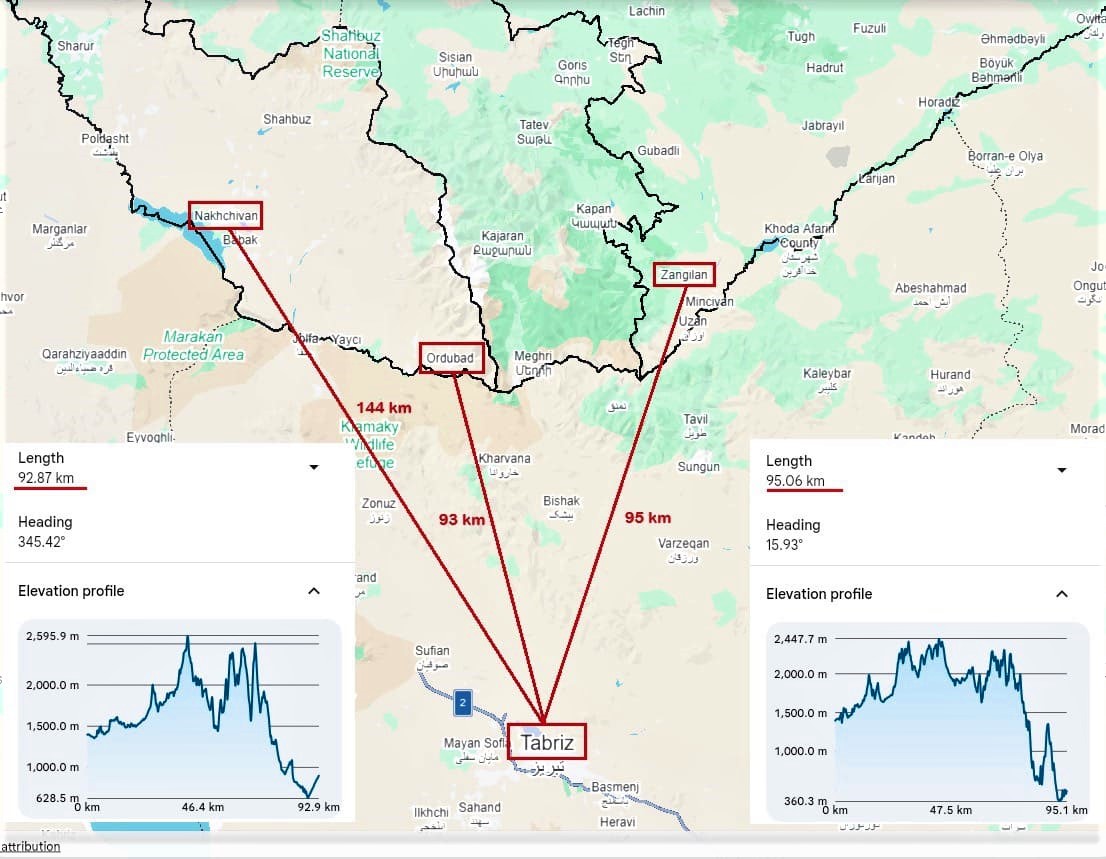
Moreover, had the forces or activities of any third state been present in areas adjacent to the Iranian border, Iranian border guards would, at the very least, have been able to observe this. So far, no statement, at any level, official or unofficial, has ever been made by the Iranian side regarding such activity, whether before, during, or after the war.
II Claim – One of the key operations run out of Azerbaijan was the March 4 killing of Rahman Moghaddam, the IRGC’s intelligence division chief, and that the following day, drones hit the territory of Azerbaijan's Nakhchivan enclave.
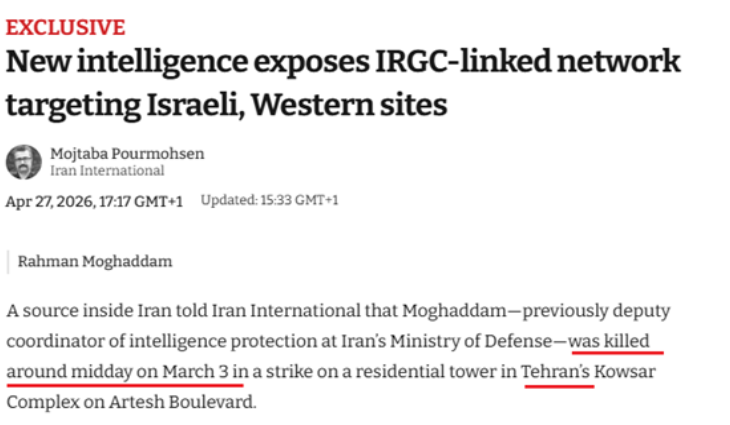
Let us start with this: according to open sources, including an April 27 article by the reputable outlet Iran International, Moghaddam was killed around noon on March 3, when a strike hit a residential tower in the Kowsar complex on Tehran's Artesh Boulevard, a day earlier than the March 4 date CNN World cites.
CNN World says nothing about whether he was killed by a drone, a missile, or some other means, nor does it explain how the specific strike on a residential building in central Tehran was technically carried out, and it is impossible to examine the real cause from the damaged section of the building either.
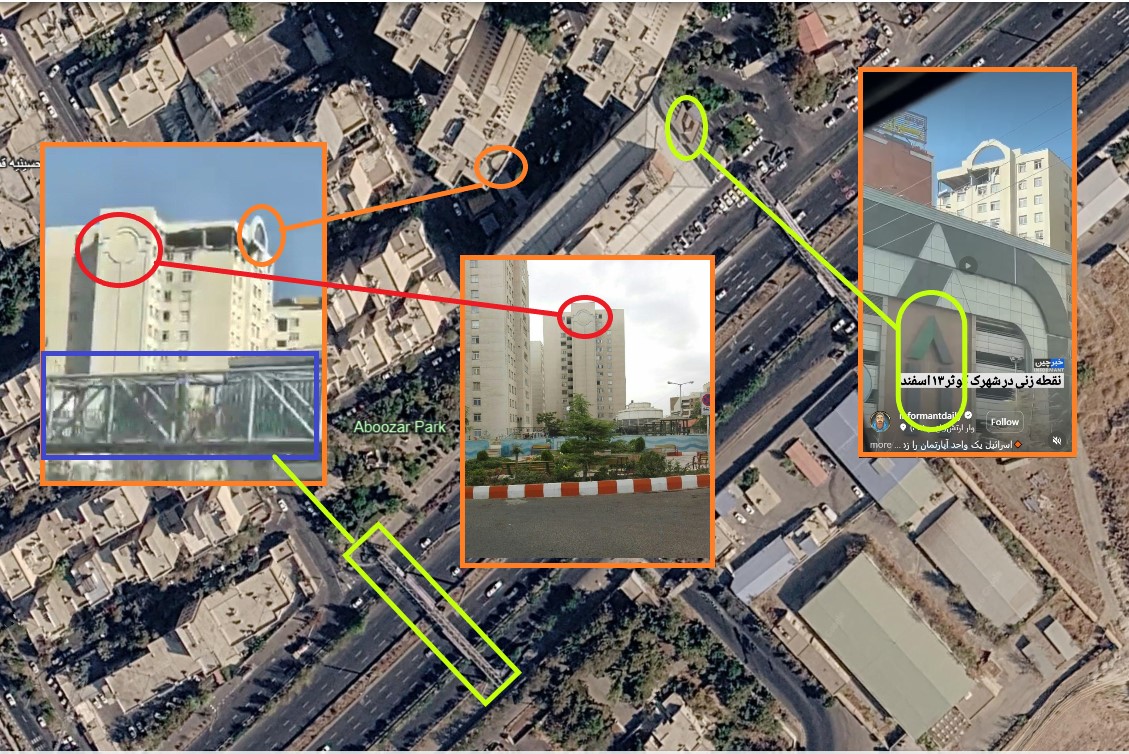
The fact that, in an analytical piece presented under the label "Exclusive" and based on four sources, the date does not match the version given by another sources, and that the manner in which the event occurred is described only in vague, general terms, gives grounds to say that this looks more like a fabricated story than anything else.
CNN's text lists "intelligence-gathering missions and drone operations" among the activities of the group in Azerbaijan. If we momentarily take the article's authors at their word and assume that the building was struck by a drone launched from Azerbaijani territory, then the area of Azerbaijan closest to Tehran would be the Astara district. Drawing a straight line on the map, this distance comes out to 390 km.
However, an analysis of the terrain between the two points (Astara and Tehran) shows that mountain ranges along this route vary in height from 2,000 to 4,500 meters. Not only would operating a drone over such sharply varying terrain across that distance be far from easy, but knowing that the target was at home at that particular moment, striking the location with precision, and carrying out the other activities would be next to impossible.
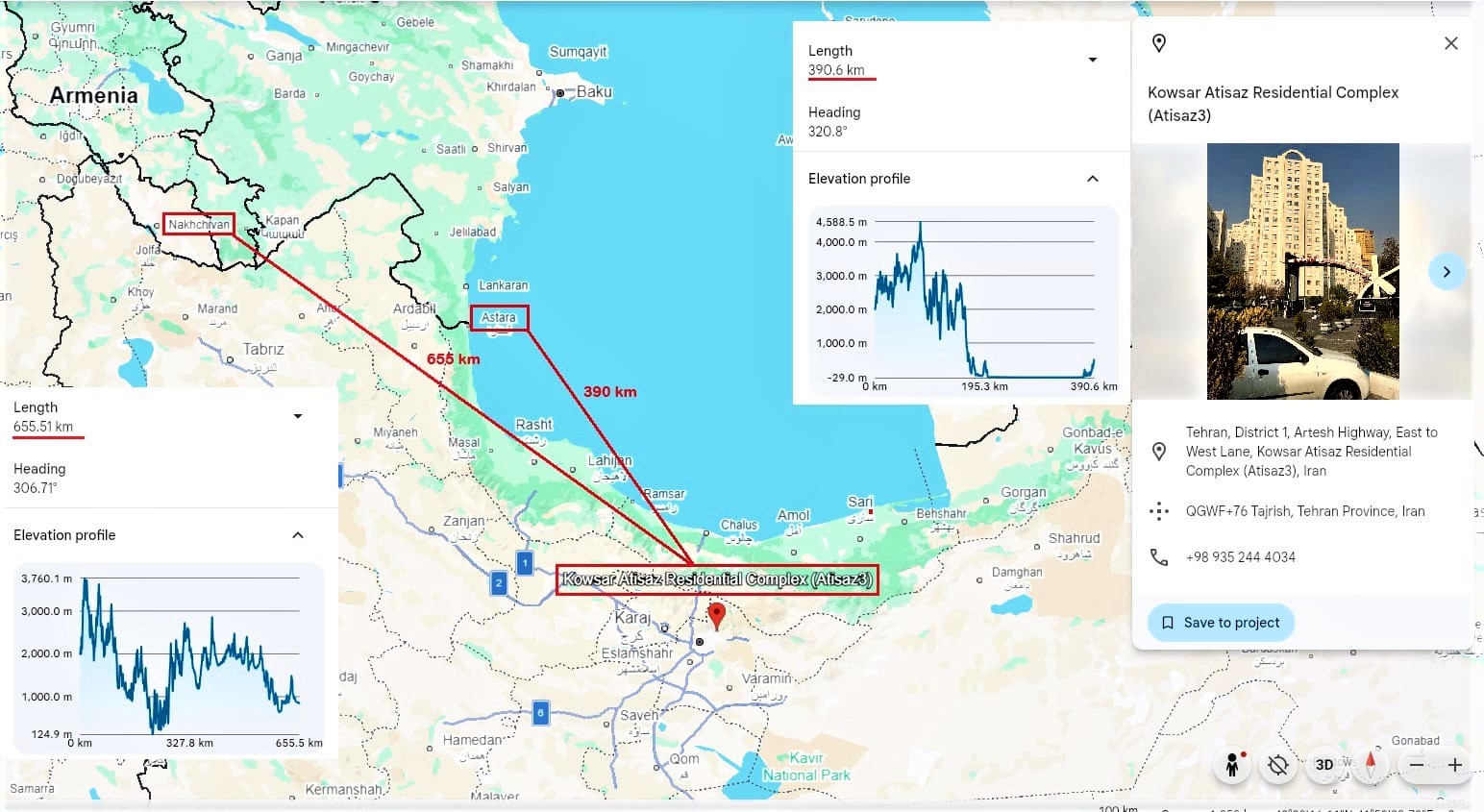
The authors claim that, in response to Moghaddam's killing, Iran carried out drone strikes one day later on the terminal of Nakhchivan International Airport and other civilian facilities. Yes, the strikes did take place — but not one day later, rather two days later, on March 5. And by the authors' own logic, Iran should have struck the areas located 96.5 km from Tabriz. Yet Nakhchivan Airport and the nearby facilities that were hit lie approximately 145–150 km away.
Likewise, given that the straight-line distance from Nakhchivan Airport to Tehran is 655 km, 600 km from Ordubad, and 560 km from Zangilan, it is not even possible to claim that the strike on Moghaddam was carried out from those directions.
All of these facts give grounds to conclude that the claims that Israeli troops were stationed roughly 60 miles from Tabriz, that Rahman Moghaddam was killed as a result of operations originating from Azerbaijan, and the article's other broader claims amount to baseless assertions that do not withstand scrutiny and appear designed to deliberately generate tension between neighboring countries and across the region.
CNN World's silence in response to calls by Azerbaijani authorities to present facts further confirms that this is a case of disinformation.