
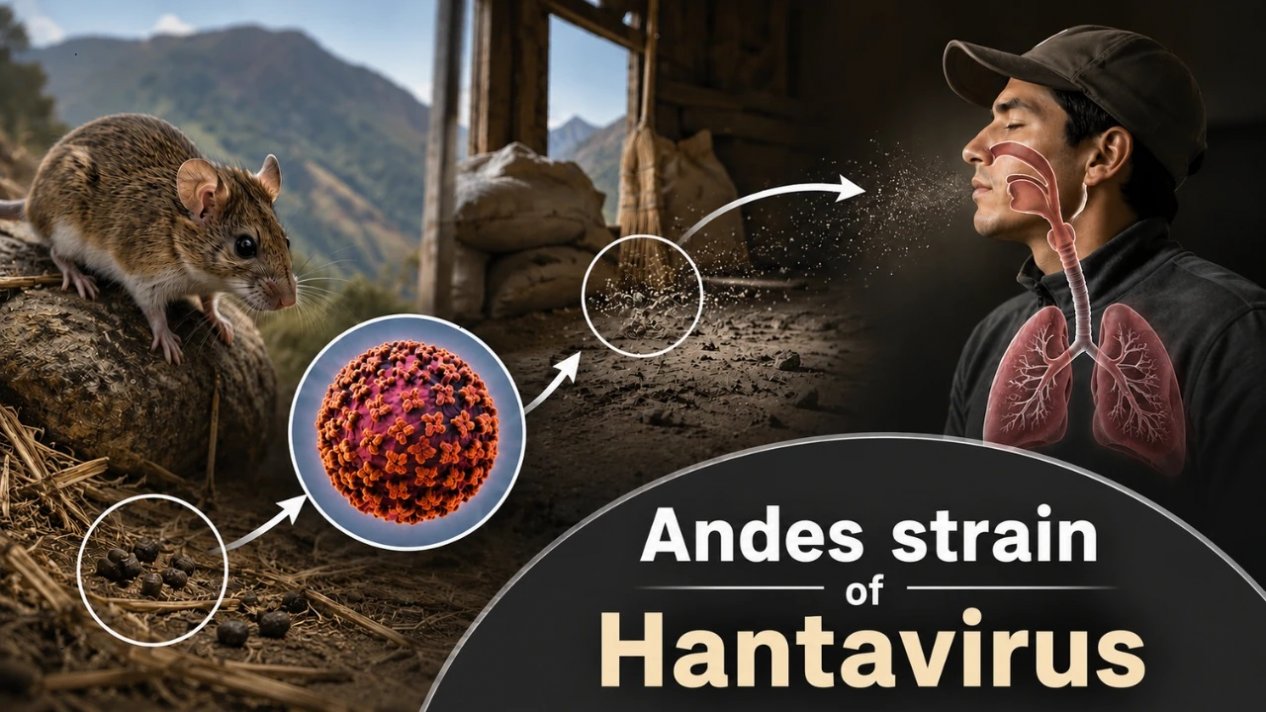
While human-to-human transmission of the Andes hantavirus is uncommon, it is still possible, according to the World Health Organization, which contradicts online posts that claim it can only spread from rodents.
Photos of a printed fact sheet, which says in its first paragraph that hantavirus is not contagious, were shared online in early May after a hantavirus outbreak on a luxury cruise ship killed three people. The sheet also features the San Juan Basin Health Department logo.

“Here is a Hantavirus Fact sheet from the early 90’s from a Government Health Department. It CLEARLY states Hantavirus is NOT contagious! Everyone learn this and pass it on,” one post, opens new tab captioned the photos.
Reuters could not independently verify the authenticity of the fact sheet or when it was published.
Colorado’s San Juan Basin Health Department was dissolved, opens new tab at the end of 2023, according to local media.
Hantavirus infection in humans is usually caused by contact with contaminated urine, droppings or saliva of infected rodents, a World Health Organization fact sheet says. The Andes hantavirus has been documented to transmit between humans, but it is the only type found to do so.
The Andes virus is also the type of hantavirus linked to the cruise ship outbreak, with seven cases confirmed.
Colorado’s health department said in an email to Reuters that it was not aware of any cases of the Andes virus having been recorded in the U.S. state, where the San Juan Basin Health Department once operated.

“In Colorado, we have the Sin Nombre hantavirus, which has not been shown to transmit person-to-person,” said Hope Schuler, communications director at the Colorado health department’s Division of Disease Control & Public Health Response.
She added that the U.S. began hantavirus surveillance, opens new tab in 1993, when the Sin Nombre virus was discovered in the Four Corners region of Colorado, Utah, New Mexico and Arizona. Schuler said Colorado reported five cases in 1993.
The U.S. Centers for Disease Control and Prevention’s (CDC) website also says rodents carrying the Andes virus have not been found, opens new tab in the United States.
The possibility of human-to-human transmission, opens new tab of hantavirus was first described, opens new tab by scientists in 1995 in Argentina. The Andes virus was confirmed with genetic evidence as having the potential to spread between humans in a 1998 study, opens new tab.
The CDC did not respond to a request for comment.
VERDICT
Misleading. While uncommon, hantavirus, specifically the Andes strain of the virus, can spread between humans. Reuters could not verify the authenticity of the San Juan Basin Health Department fact sheet. Colorado’s Health Department said it has never recorded a case of Andes virus in the state, though it has recorded cases of the Sin Nombre hantavirus, which has not been documented to spread between humans.