
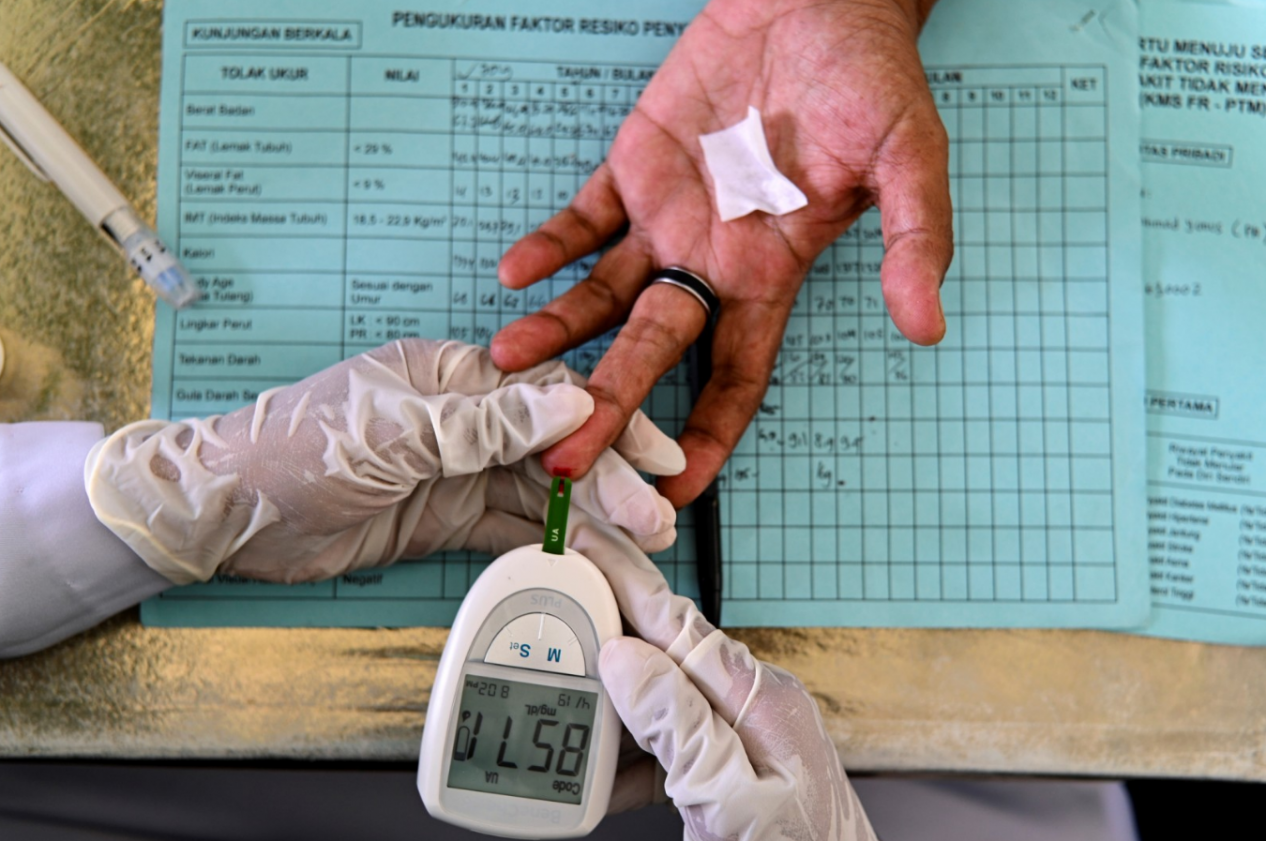
Millions of people worldwide are prescribed the hypertension drug amlodipine, which has been safely used for decades and is endorsed by various health bodies -- but recent online posts in Indonesia inaccurately claim the medication itself harms the heart. Experts told AFP the social media rumours are dangerous as stopping the medication leads to the rebound of high blood pressure, one of the leading causes of death globally.
"The more you take hypertension drugs, the more they trigger heart problems and the thinning of peripheral blood vessels," reads part of an Indonesian-language Facebook post shared October 20, 2026.
It goes on to say high blood pressure can be treated without medication, labelling the generic drug amlodipine as a "mass murder medicine" (archived link).
The account that shared the post -- which has more than 95,000 followers -- promotes a paid webinar discussing several health issues. It has spread misinformation about measles, Covid-19 and HIV treatment that AFP previously debunked.

Hypertension, a serious medical condition where blood vessels have persistently raised pressure, is a "silent killer" according to the World Health Organization (WHO) (archived link).
An estimated 1.4 billion people have the condition, which when left untreated can cause strokes and increase the risk of heart, brain, kidney and other diseases (archived link). Many patients do not notice symptoms and are unaware there is a problem.
In Indonesia, a survey by the health ministry in 2023 found hypertension was the fourth highest risk factor causing death (archived link).
Other Facebook posts also dissuaded patients from taking amlodipine, drawing in comments that indicate many users of the platform believed the claims.
"I have a history of high blood pressure, but I've never taken any medication for it. I'm just scared of the side effects," one wrote. Another said: "I have asymptomatic hypertension, no complaints, and I've never taken any medication."
Indonesia's social media is frequently awash with misinformation spread by influencers claiming to promote "health education", with the circulating claims about amlodipine similarly unfounded.
'One of the safest'
"Amlodipine is one of the safest blood pressure-lowering drugs," Alta Schutte, a professor of cardiovascular medicine at the University of New South Wales in Australia, told AFP via email on November 3 (archived link).
"It does not cause thinning of the vessels," Schutte said, refuting the false posts that are spreading online. What the medication does is cause blood vessels "to relax", thus helping lower blood pressure.
"If someone suddenly stops taking it, the blood pressure will increase again and their risk for preventable death and disability will immediately start to increase again," she explained.
"It is terrible that such absolute rubbish gets circulated to people who need effective and affordable medicines most."
The US Food and Drug Administration approved the use of amlodipine in 1987 (archived link).
Since then, health bodies from the WHO to nonprofit charities such as the American Heart Association and Blood Pressure UK have listed the drug as one of the medications to use for treating hypertension (archived here, here and here).
A representative for Indonesia's Ministry of Health told AFP on November 7 the recommendation is the same for the archipelago.
"The use of amlodipine is supported by clinical evidence, long-term clinical experience and its inclusion in national clinical guidelines," the representative said.

Lifestyle changes 'not always enough'
A 2023 study published in the journal Function indicated some 400 million adults worldwide are being prescribed the class of medications that include amlodipine. No links to heart disorders were found.
John D. Bisognano, a cardiologist and professor of internal medicine and cardiology at the University of Michigan Medical School, separately refuted claims that hypertension can be treated without medication.
"Lifestyle changes are important for everyone with high blood pressure, but they are not always enough," he told AFP in an email on November 4.
"People with substantially elevated blood pressure or higher cardiovascular risk may need medication alongside lifestyle changes from the start."
Like any drug, amlodipine can have side effects that usually ease as the body gets used to the medicine, according to the UK's National Health Service. These include ankle swelling, dizziness and flushing. Serious side effects are "rare" (archived link).
"Patients should not stop it on their own because of a circulating post," Bisognano said.
"If they have concerns or side effects, they should contact their prescribing clinician, who can adjust the dose or choose another treatment if needed."